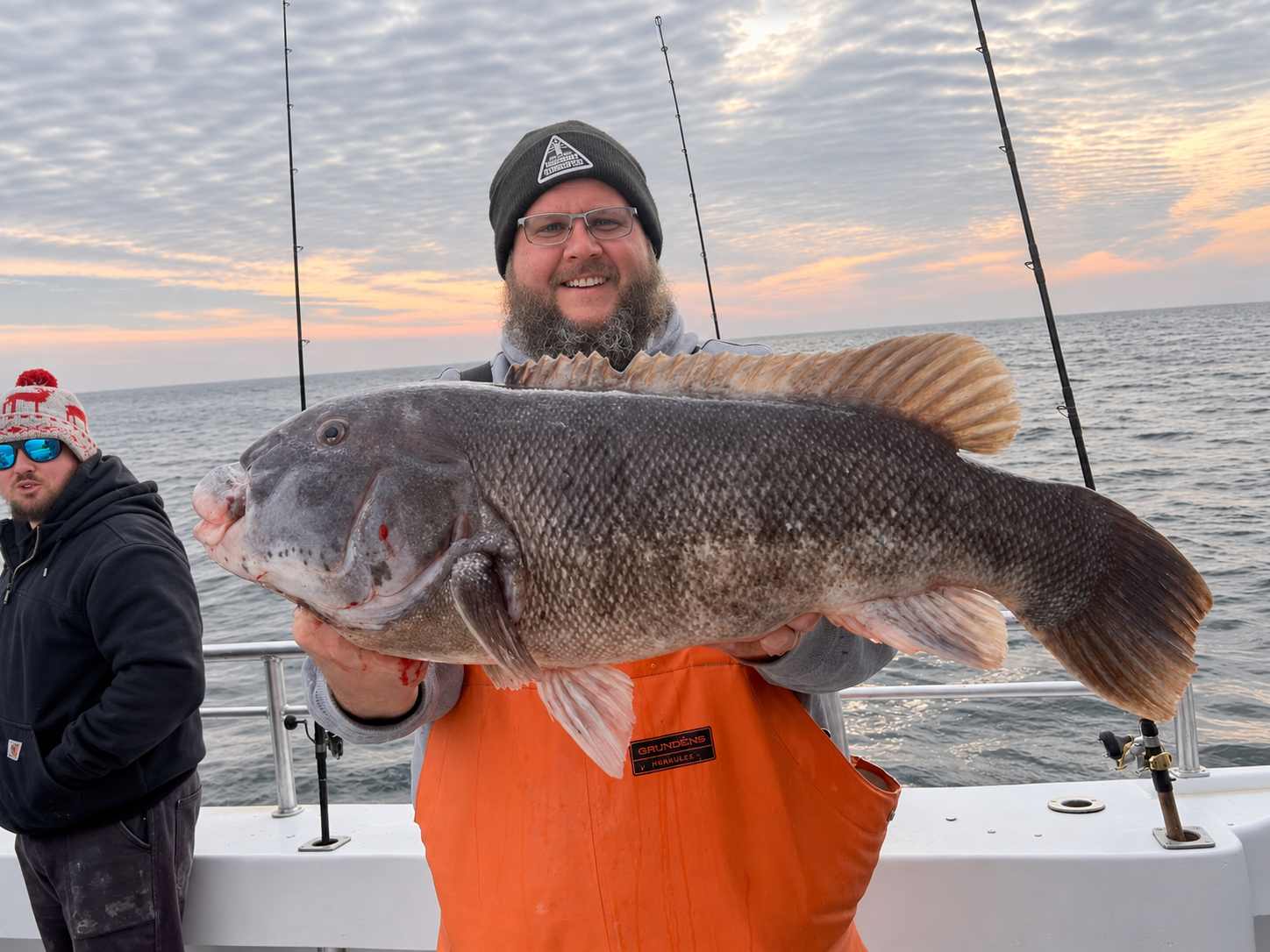
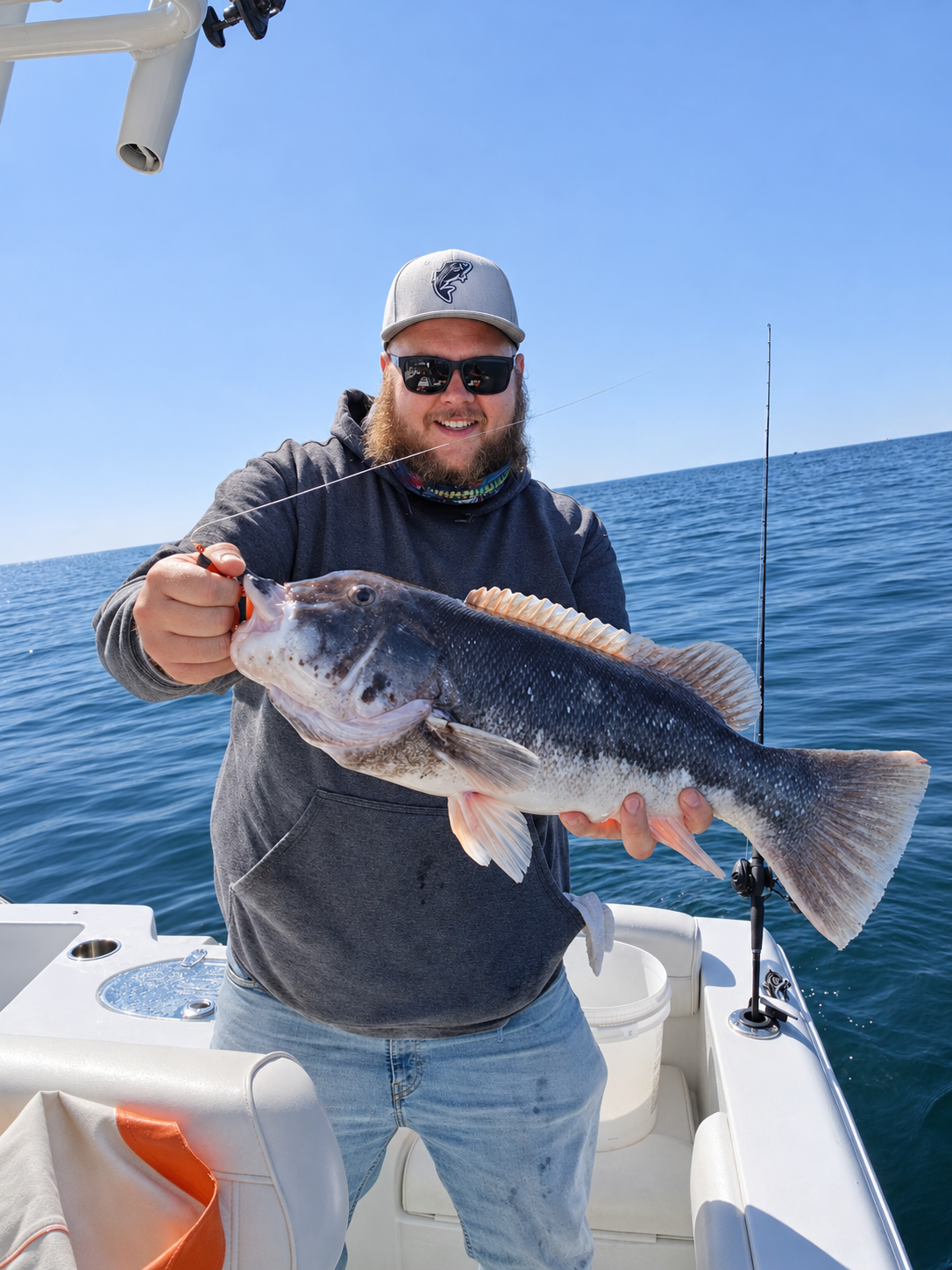
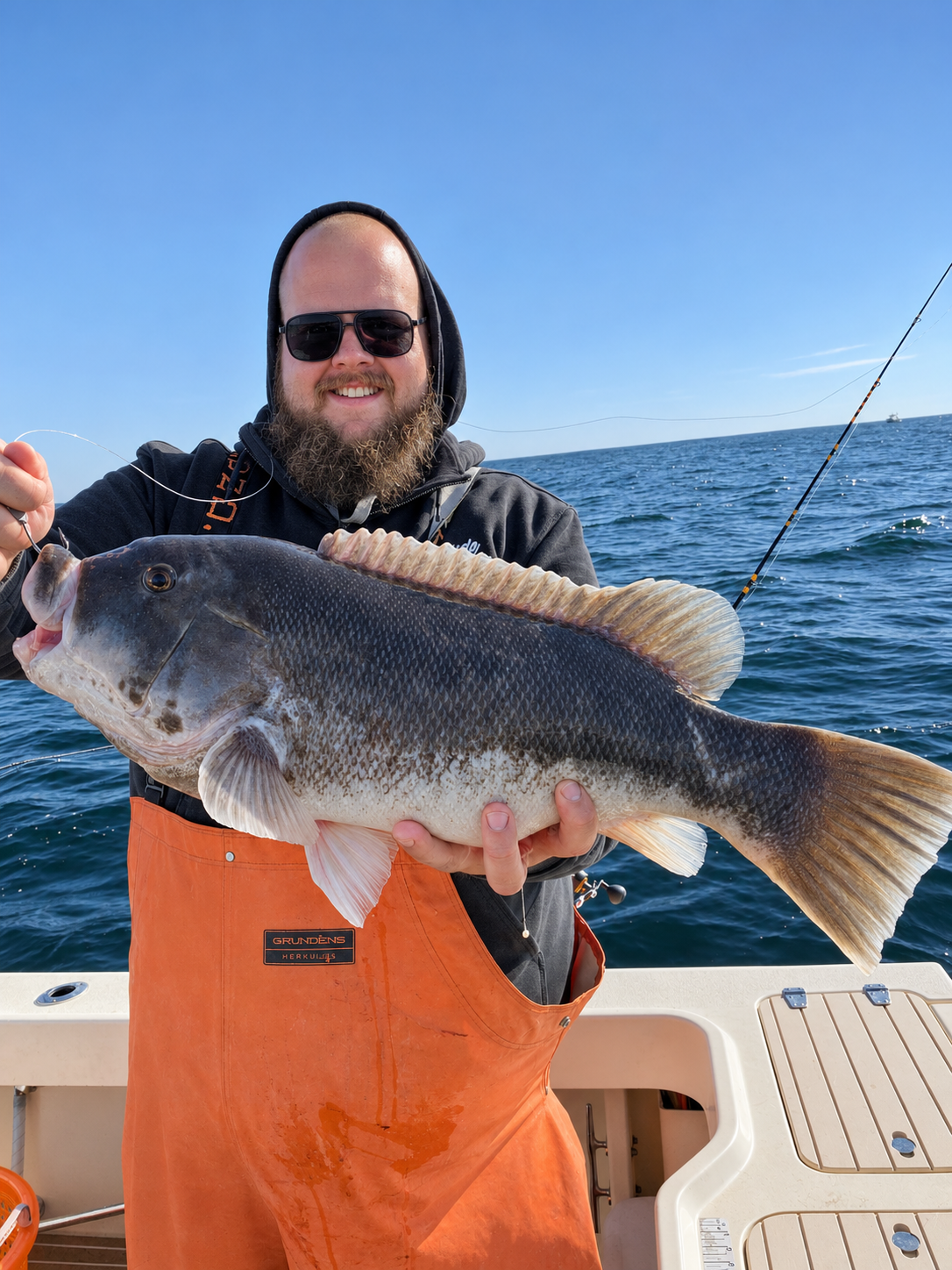
By Matt Sorrentino, World’s Greatest Blackfish Fisherman (self-proclaimed, but I have receipts)
December 11, 2025
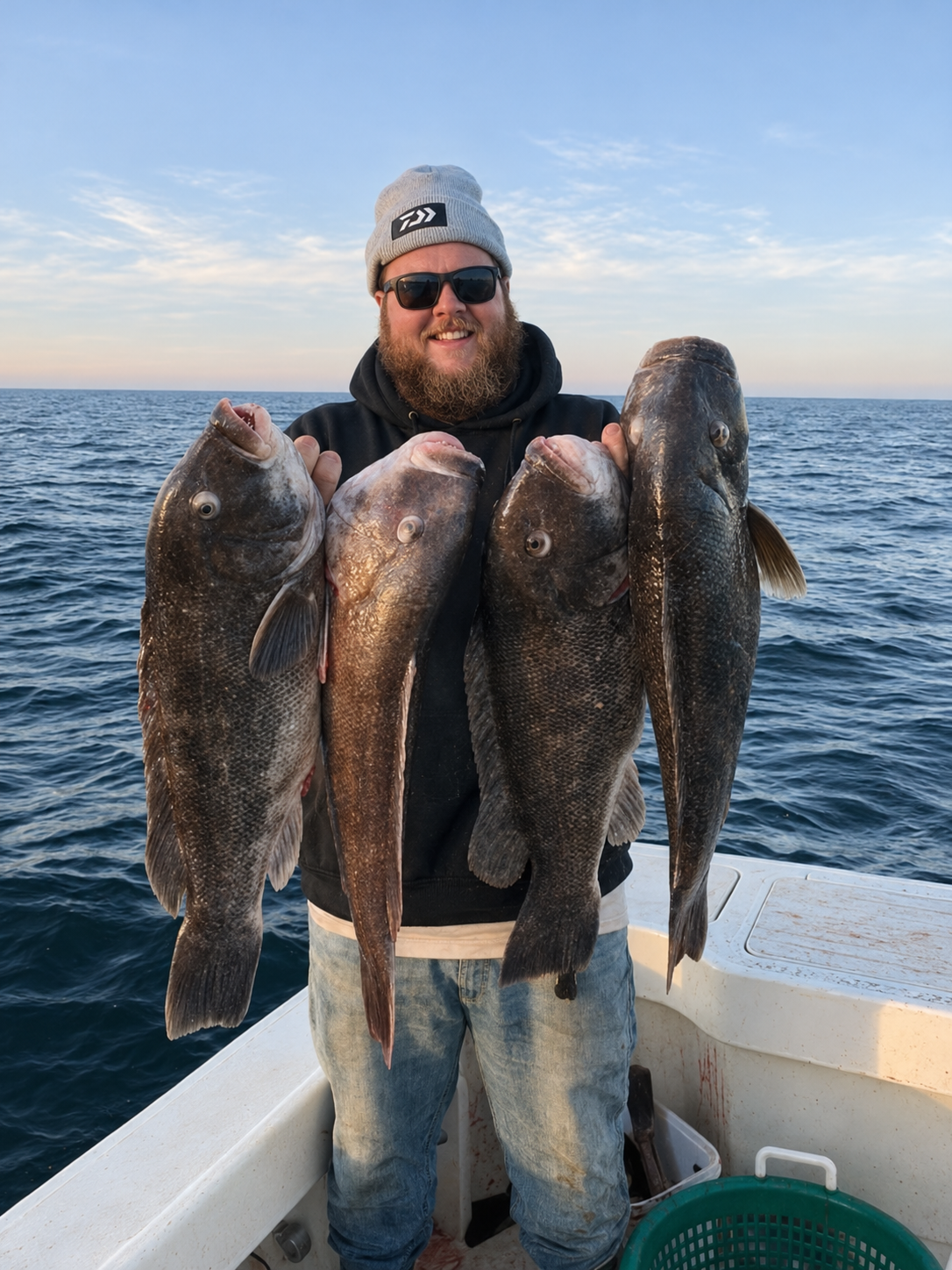
Let’s get this out of the way: I am, by my own declaration, the world’s greatest blackfish fisherman.
This is not a title you can earn. There’s no committee, no belt, no trophy—though I do have a Christmas ornament that confirms it. It’s a title you announce with enough confidence that the internet feels morally obligated to argue with you about it.
The comment section has thoughts. “You? Greatest? I know ten guys who’d out-fish you. You didn’t catch that on your boat. I know a guy that knows a guy.”
Meanwhile, those internet heroes are posting a 7-pounder with “easy 12” in the caption.
I didn’t start as the legend you know today—the guy in the video throwing a scale over his shoulder and telling people to “just make up a number” because, technically, the scale doesn’t know the fish like you know the fish.
I started like everyone else: clueless, overconfident, under-equipped. For me, it was decades ago, standing on a rock on a jetty. In this article, I’m going to share some memorable trips that helped develop me into the realm of legends.
My First Blackfish
I got introduced to tautog many years ago on the rocks of Barnegat Inlet, where I was absolutely not the world’s greatest blackfish fisherman. I didn’t even know what a blackfish was.
Late summer nights, I’d chunk bunker and throw metals for bluefish at the top of the tide. Fishing always seemed better after dark. I’d get there early, claim a rock, and do what every other jetty hero does—cast as far as I could and wait for chaos.
Most evenings I ended up near the same father-and-son duo, Jon and his 8-year-old son, Kevin. Jon wasn’t casting to the horizon like the rest of us. He was dropping straight down into the rocks for God-knows-what, while Kevin inevitably drifted over to me to chase blues with borrowed rods and lures.
On slower days, I watched Jon quietly pluck small black fish out of the cracks. I had no idea what they were. Eventually—like his kid—I worked up the courage to wander over.
“What the hell are you catching?”
Those are the first words I ever said to the man who accidentally ruined my life in the best possible way.
He smiled, showed me the small hooks, the cut crab, how he wedged the bait into specific crevices. He even stopped his own fishing to set up my rod and share his bait.
It took a few dozen tries, but eventually I caught one. It was tiny, nowhere near a keeper, but the way that little fish tried to rip the rod out of my hands in a shallow rock hole flipped a switch in my brain.
Just like that, bluefish became the sideshow. Tog became the main event.
After a while, I got pretty good from the rocks. With time and practice, I could walk down there on almost any tide and pretty much guarantee a keeper. Jetty sharpie status unlocked.
Then I found out they get a lot bigger than those 15–20-inch inlet trophies.
My First Time in the Ocean
At some point you learn there’s a bigger stage: wrecks and reefs in the ocean are where the real ones live.
My status as jetty blackfish sharpie earned me an invite on my first ocean blackfish trip on a private head boat, fully convinced I was going to be an absolute killer and help load the box with keepers. I “knew” how to feel the bite. I “knew” how to fish a crab. I “knew” I was going to put on a clinic.
The ocean had other plans.
It was lumpy as hell; a lot of the boats in the fleet stayed tied to the dock that day. I was wedged between two guys who were quietly abusing the population—fish after fish after fish—while I reeled up empty hook after empty hook. I didn’t even scratch out a short that day. A real humbling experience. Our jetty hero was an ocean zero.
But as is the case with life, every loss should be a lesson.
Here’s what I learned:
Fishing the ocean and fishing the jetty for blackfish are very different, and there’s a whole other learning curve that comes with the boat. Keeping your bait on the bottom is easy from land—the rocks are stationary. The boat moves with the swells. Up and down your bait goes if you’re not keyed in to the movement of the sea.
Blackfish aren’t typically interested in a moving target. It’s important that you maintain contact with the bottom while keeping your line taut to feel the bites. Too tight and you’re bouncing a sinker off the bottom. Too loose and the slack doesn’t allow you to feel anything.
You need to maintain that “sweet spot” with the ebb of the sea. As the waves lift the boat, lower your rod tip; when the boat settles between the swells, gently raise the tip to maintain ideal tension.
I went home humbled and annoyed, but not done. Patience and persistence eventually paid off. I adapted to the nuances of wrecks and reefs, kept my bait still and my line taut, felt the bites, and started catching consistently.
The First Heartbreak
For a long time, I didn’t think equipment mattered. I was a proud “$50 combo from Walmart” guy. My theory was simple: if it breaks, I’ll just buy another one. Why spend hundreds of dollars on “something that lasts” when you can buy disposable garbage and always have something new?
That philosophy lasted until one deep-water trip out of Atlantic City.
We were fishing reefs in 90–110 feet of water, and I had already scratched out a few keepers. Then it happened—the bite I’d been waiting years for. I set the hook and instantly knew this wasn’t another 3-pounder. I lifted the fish off the bottom and went to turn the handle.
The handle did not move.
The fish was digging back to the wreck, and my reel simply did not have the guts. In a panic, I did the one thing you absolutely should not do with a big tog near structure: I bowed to the fish to gain some line and planned to pump it back up.
Pump-and-reel works on a lot of fish. Big blackfish are not the same.
I pumped once and came tight to the wreck. I could still feel the fish on the other end, pinned in the structure, then eventually the line parted. I had just lost the biggest tog I’d ever hooked because I brought a plastic knife to a gunfight.
The very next day, I walked into a tackle shop, gave them my entire budget, and walked out with an Avet and a Tsunami Classic—about a $300 combo, the most money I had ever spent on fishing tackle at the time.
That setup became my security blanket. I wasn’t going to lose that fish again because my gear folded. I stewed on that fish for years.
From that experience I learned how important the right equipment is. I also learned that the local tackle shop isn’t out to just make a buck. They want to create repeat customers. They want you to catch fish so you come back and shop with them again. In the world of online shopping and warehouse deals, that’s what really sets them apart.
If you’re looking for gear, talk to your local guys. Give them your budget and let them know your goals. They’ll point you in the right direction in hopes of earning your future business.
Sage Advice
I got really good at tog fishing. I eventually switched to a lighter setup and became deadly with the jig. For years I was high hook. I’d limit out. I’d win my fair share of pools on party boats. Friends and I would crush them. I was very good at catching lots of 3–7-pound fish.
But I could not get over the hump. I wasn’t getting that “right” bite again. No double digits. I started to feel cursed. Would I ever be lucky enough to get that bite again and get a chance to prove I’d learned from my past mistakes?
Then I fished with a guy who changed the way I think about big fish.
At the time, I was all-in on small bottom-sweeper style jigs. Little profile, peeled crab, shell off—deadly presentations. They flat-out caught. I’d usually be the first one with life and often catch the most fish on the boat.
This guy watched me work and said, “Your jigs are too small to catch big fish. You don’t have enough bait on there.”
I thought he was nuts. I’d caught fish to 9 pounds that way. I just “hadn’t gotten the right bite” yet.
We fished together all day. I probably outfished him 10 to 1. He didn’t catch a double-digit fish that day, either. On paper, I won. But his logic stuck with me.
Here’s what he told me:
If you want big fish, fish bigger bait.
You’re not waiting long enough. Not “wait for the thump”—wait through the thump. Let the smaller fish peck, let the 5-pounders thump, and wait for the bite that snaps your line like a rubber band or suddenly goes dead slack.
That’s the bite that’s moving the bait to the crushers in the back of a big tog’s throat.
It made sense. We already wait through little taps to catch keepers. Why not wait through keepers to get the jumbos?
I changed my approach. Bigger crabs. Different jigs with a longer shank so I could load more bait. Shell on, legs on, everything intact to keep the bait in play longer. More time in the water, more opportunity for the right fish.
It didn’t happen overnight. But that shift is what helped me crack the code.
My First Double Digit
I fish a lot with my buddy Tony. He’d had a couple of big fish over the years, but we were mostly in the same boat—catching plenty of quality fish but no real giants. We spent a lot of days on the water filling the cooler and going ORL+++.
One winter, we decided to move his boat down toward my neck of the woods and really commit to finding the right fish, convinced they just didn’t live where we were fishing.
Early December, about 60 feet of water, fishing a reef. A few fish in the cooler with some pretty good action. I drop my jig and, for once in my life, actually listened to someone’s advice.
I waited. I waited longer. I felt almost nothing.
Then my line just started swimming away.
I set the hook and came tight on a fish that absolutely did not want to come up. When we netted it, my first true double-digit tog hit the deck—just a hair over 10 pounds on a certified scale.
And no, a 9.9 is not “basically 10.” If you’re rounding up to the nearest whole number to make yourself feel better, that’s on you. Where I come from, it doesn’t count unless it counts.
We dissected that trip for days—what we did differently, how the bait was rigged, where on the piece we were sitting. Some of it I’ll openly share. Some of it you can pry out of me if we ever share a frigid winter rail together.
What I will say is this: after that fish, it didn’t feel like a luck game anymore.
That season, the floodgates opened. We caught more double digits than I thought was even possible. I personally landed 23 over 10 that year. We put 40 double digits on the deck of that 25-foot Parker with fish up to 16 pounds. And we did it everywhere we went. We fished our old haunts up north with the same results. We traveled further south and caught the big ones. We unlocked something really special.
My Single Best Day: Five Double Digits
My best day ever blackfishing came at the end of that epic season, and it didn’t start like a best-anything.
It was late January. Bitter cold, sunny, flat calm—basically my idea of heaven now. We were fishing a piece in about 50 feet where we’d already done plenty of damage earlier in the season.
The problem was, the fish hadn’t gotten the memo. It was brutally slow.
Tony and I were fishing 2-ounce jigs, our usual go-to, and getting almost nothing. We had a new guy with us, Joe—hardcore fisherman, not a ton of tog boat experience. As we were talking about better days, I noticed he kept reeling up with no bait. I always notice.
I fish for blackfish like I’m playing middle linebacker. My head is on a swivel. I see who’s hung in the structure and oftentimes I’ll notice a novice fisherman getting bites before they do. Blackfish action can be very localized along a boat, and I am not afraid to move around.
I dropped my jig in the same area he was. I had the same lifeless feel I had before. But Joe kept coming up with an empty hook.
“You getting bit?” “I’m getting smoked,” he laughed.
I watched closer. He wasn’t fishing the same 2-ounce jig we were. He had a tiny 1/2-ounce bottom-sweeper jig on. Of course he did. He came from the same jetty fishing background I did.
I dug in my bag, found a small back-bay jig in the same color, and dropped it down. It took forever to hit bottom—but once it settled, I immediately had life. Not big fish, but life.
We fished that spot out before deciding to slide out to deeper water and set on a new wreck. I went back to my 2-ounce jig. Crickets. Eventually I thought, “If it worked inshore, maybe it’ll work out here.”
I retied the tiny jig. It took an eternity to reach bottom. I had so much belly in the line I could barely feel anything. All I knew was my line eventually stopped leaving the spool; that’s how I knew I was on the bottom.
For whatever reason, that was what they wanted that day. Small jig, small bait, no feel. My line would slowly drift with the current, then suddenly start moving the other direction. I’d set the hook without ever feeling a bite and come tight. Over and over and over.
I’ve had trips with two double digits before. That day I landed five between 10 and 14 pounds, plus a pile of 5–8-pound fish. By the time I hooked the fifth, I was just laughing like a lunatic.
I learned that even when you think you’ve got it all figured out, you really don’t know what they want. After all the years fishing those small jigs and small baits with nothing to show for it, that day that was the ticket.
There is no perfect formula. “Big bait, big fish” works… until it doesn’t. You need to pay attention and you need to be willing to adapt.
Top-Five All-Time Fishing Trip
One of my most enjoyable tog trips ever was on the Osprey in Atlantic City in late January.
On paper, it was terrible.
It was a 10-hour trip. I caught one single short. Most people caught nothing. Thirty anglers on the boat and maybe three keepers total.
But the company was great, the jokes were flying, the rail was full of people who understood exactly what they’d signed up for. We froze, we swung and missed, we got hung up, we got humbled—and I laughed all day with some great people.
I’ll remember that trip just as clearly as any hero-shot day. If your only metric for a “good day” is fillets, tog fishing is going to break your heart. The bad days are what make the good ones feel legendary.
So What Should You Actually Do?
If you skimmed everything above for the part where I tell you how to become the world’s greatest blackfish fisherman, here’s the closest you’re going to get:
Get real gear (within your budget). You don’t have to break the bank, but don’t fish deep wrecks with a toy reel. You want a fast-action rod with backbone, a reel with enough drag, braid that doesn’t come from a Temu factory, and a leader that can take a few barnacle kisses before failing.
Keep your bait still, not dancing like a car-dealership balloon. Nothing ruins your shot faster than a 12-ounce sinker banging bottom like a drum solo. Move with the boat. Keep contact. Make your crab look like something a blackfish might actually find on the bottom, not a yo-yo.
Start with rigs, then earn your jigs. For newbies, an 8–12-ounce bank sinker and a single 4/0 hook will teach you way more than a 1-ounce jig you can’t keep down. Learn to feel bottom first. The fancy stuff comes later.
Learn the bite by blowing it. You’re not going to figure out timing by reading an article. Let fish steal your crab. Pay attention to the difference between pecks, thumps, and “my line just did something weird.” There are no shortcuts here.
Fish with people who are better than you. Not the guy who caught one 15-pounder 12 years ago and posts about it annually—the guys who quietly put big fish on the deck over and over. Be a sponge. Ask questions. Watch everything.
Use one hook. Personally, I fish single-hook rigs and jigs. No snafu, no sliders, no stingers. More hooks = more hang-ups = more time in the penalty box retying leaders instead of fishing. If you can’t catch them with one hook, circle back to timing your hook set and figure it out.
Fish a lot, and take it way less personally. You can’t catch them from the keyboard. You’re going to get skunked. You’re going to suck at this. Some days you’ll feel like a god; other days you’ll feel like you’ve never held a rod before.
I’ve spent years chasing these fish. I’ve been humbled, broken off, skunked, frozen, and occasionally rewarded with memories that still don’t feel real.
If there’s one thing I’ve learned, it’s this:
No matter how good you think you are at blackfishing… You’re doing it wrong.
So am I. That’s why I keep going back.
Get out on the water. Learn from people who are more experienced than you. Know there’s more than one way to get it done, and no matter what anyone tells you, there is no final, perfect “answer” to this fishery.
And who knows—maybe one day you’ll be the world’s greatest blackfish fisherman too.
Just be ready for the internet to disagree.